What does an isolation valve do?
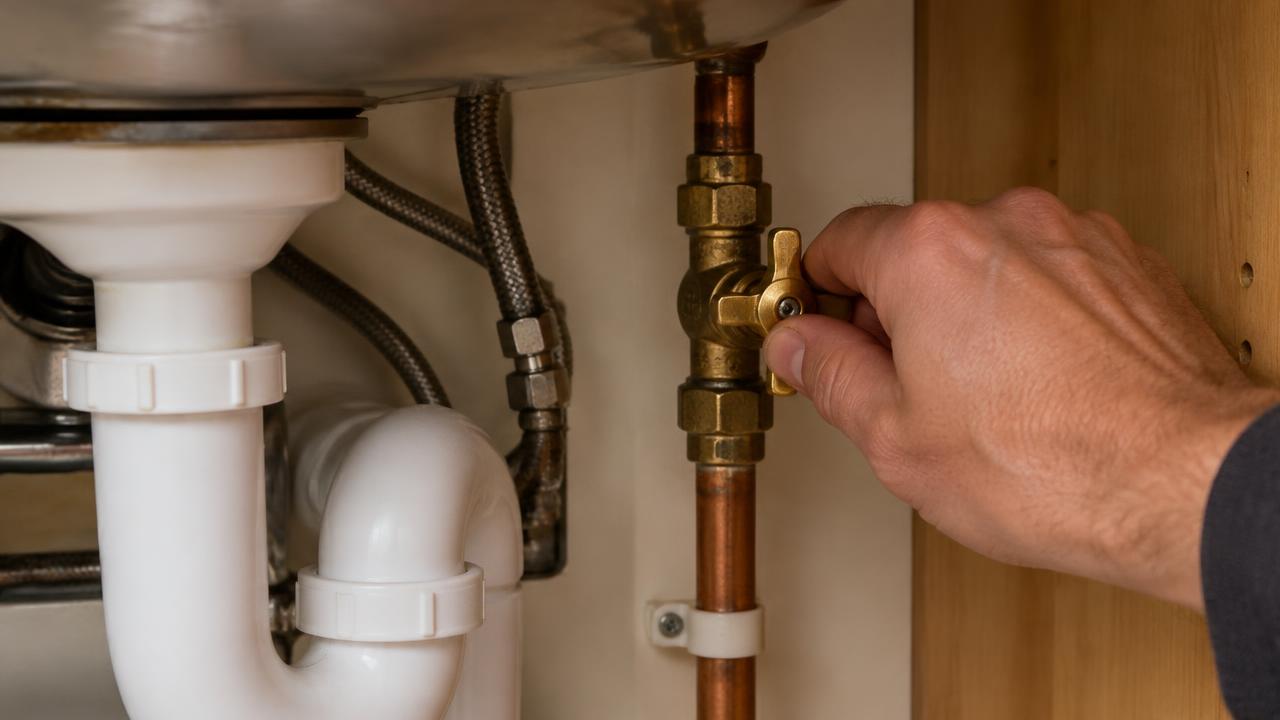
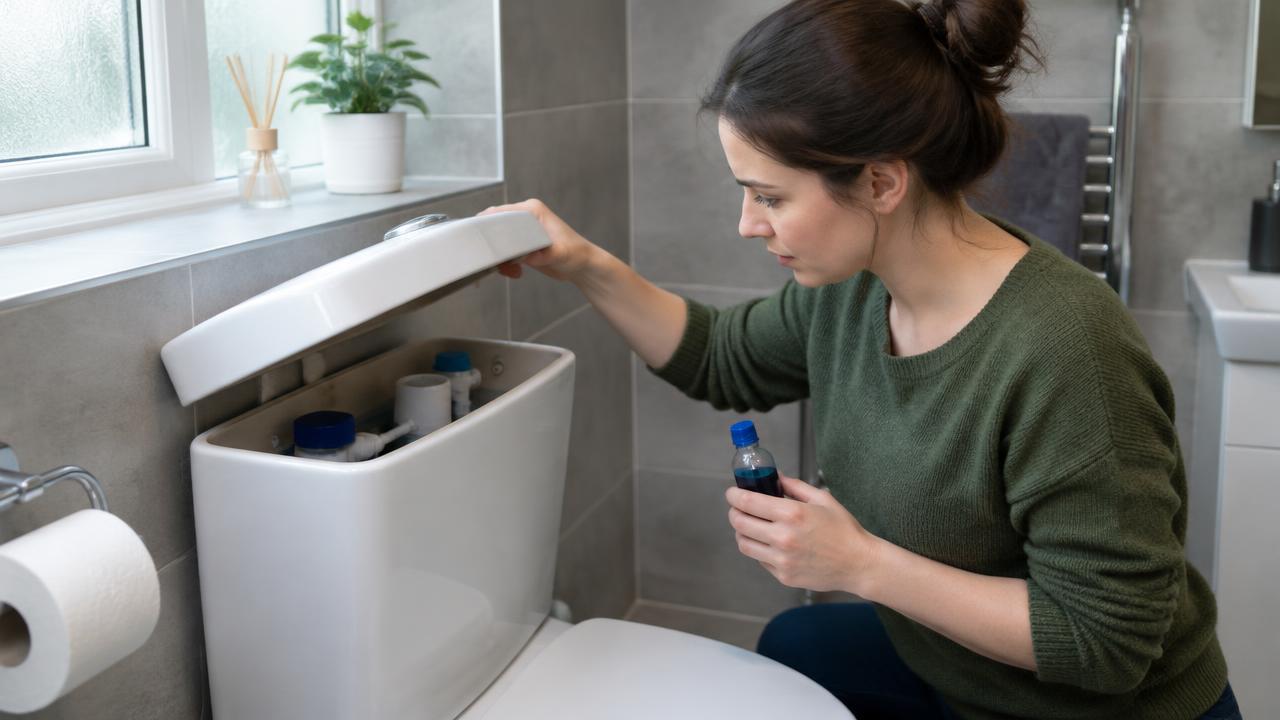
An isolation valve controls the water to just one thing — a tap, a toilet cistern, a washing machine. Instead of turning off the stopcock and cutting water to the whole house, you turn off only what you are working on. Good plumbers fit them on every tap and toilet.
Open or closed?
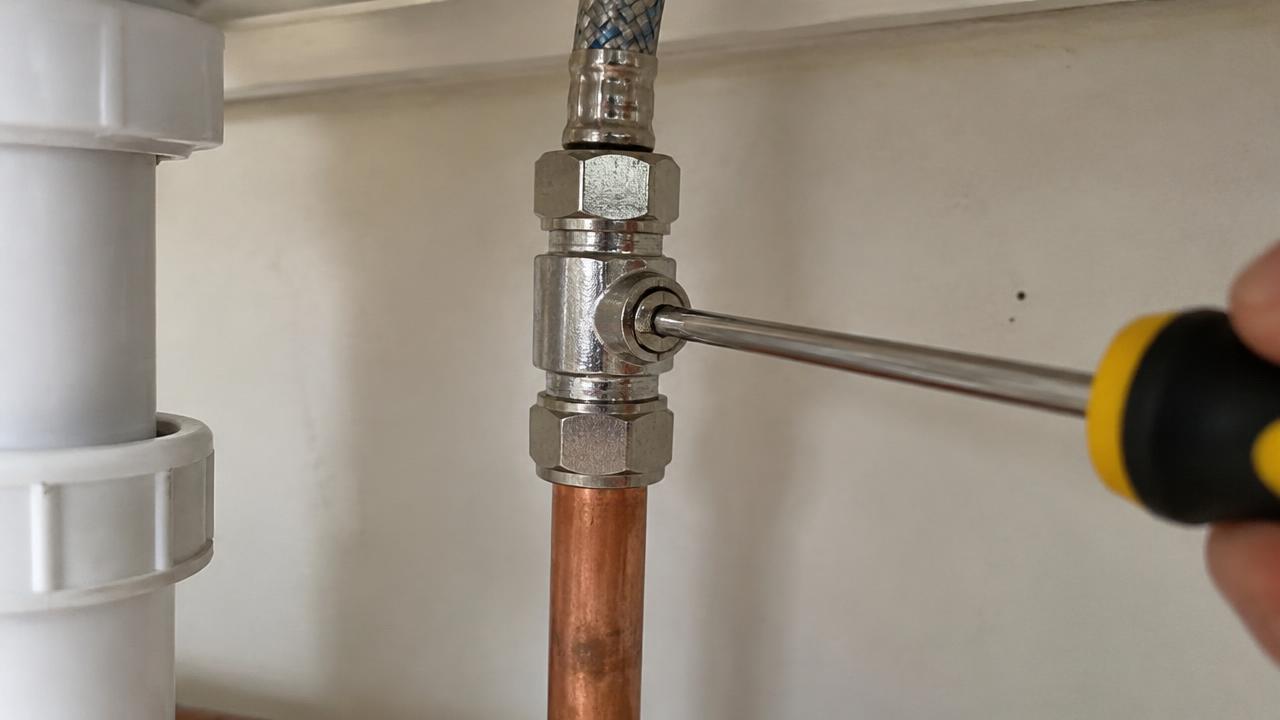
- Slot in line with the pipe — OPEN, water flows.
- Slot across the pipe — CLOSED, water stopped.
Pro tip: A quick way to remember: the slot shows the way the water can go. If it points along the pipe, water can go along the pipe.
How it works inside
Inside there is a ball with a hole through it. When the hole lines up with the pipe, water passes. Turn it a quarter, the solid side of the ball blocks the pipe. Rubber or PTFE seats around the ball are the seals that stop water sneaking around the outside of the ball — Solid ball, Seal, Solid body.
Types you will see in the UK
- Screwdriver slot valve — the most common, small and neat.
- Lever (butterfly handle) valve — easier to turn by hand, common on washing machines.
- Full-bore valves — bigger hole, better flow for low-pressure systems.
- Appliance valves — with a hose thread for washing machines and dishwashers.
Fitting a 15mm isolation valve
- Turn off the water and drain the pipe.
- Mark and cut out a section of pipe the right length, so the pipe ends go fully into each side of the valve.
- Deburr both ends.
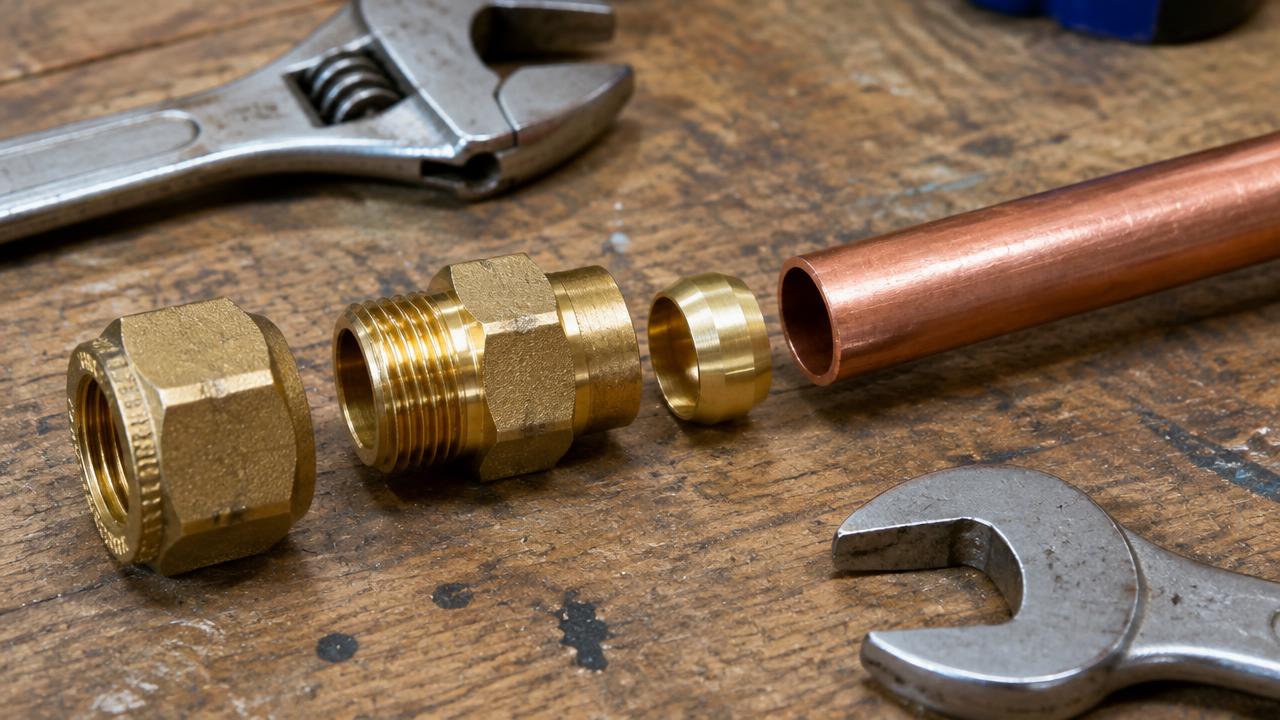
- Fit nut and olive on each side, push the valve on, and tighten with two spanners.
- Close the valve, turn the water on, then open the valve and check for leaks.
Common problems
- Valve stuck — limescale. Work it gently back and forth.
- Weeping from the slot — the internal seal is worn; replace the valve.
- Low flow after fitting — the valve is not fully open or a reduced-bore valve on a low-pressure system.