What is a compression fitting?
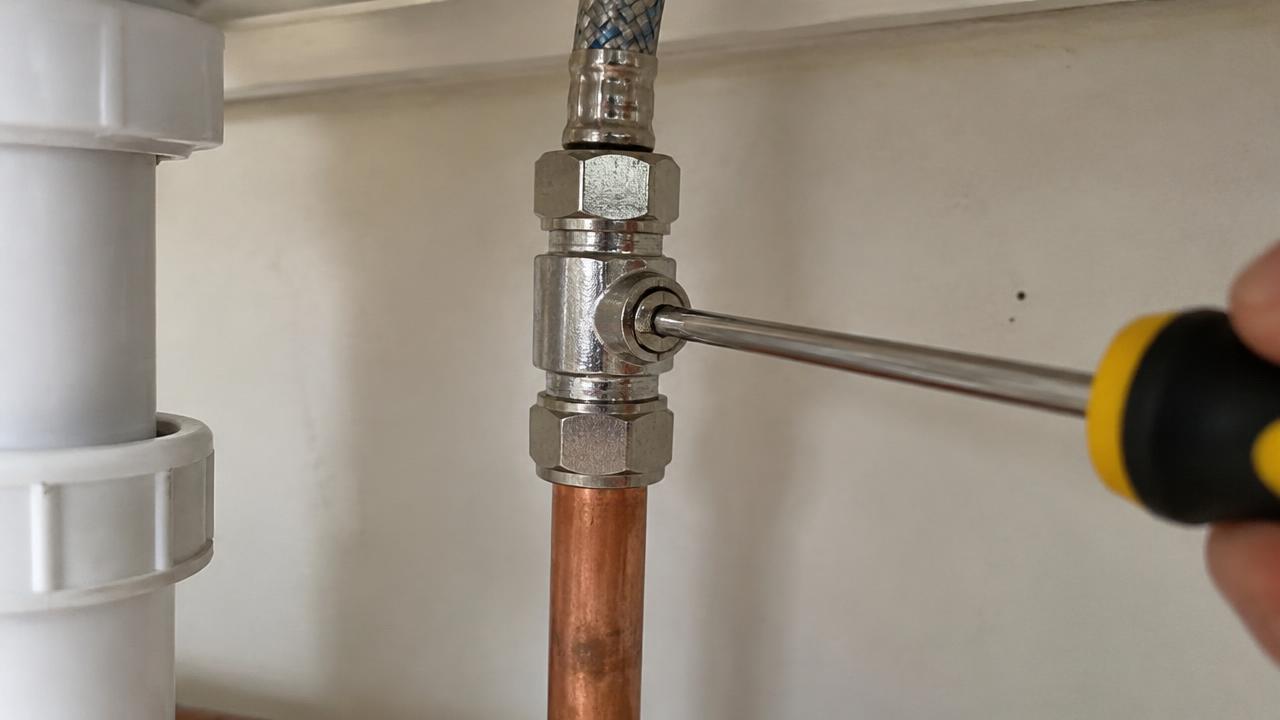
Compression fittings are brass fittings that join copper (and some plastic) pipes without heat. They are used for isolation valves, tap connections, radiator valves and many repairs. They are perfect for beginners because there is no soldering.
The three parts
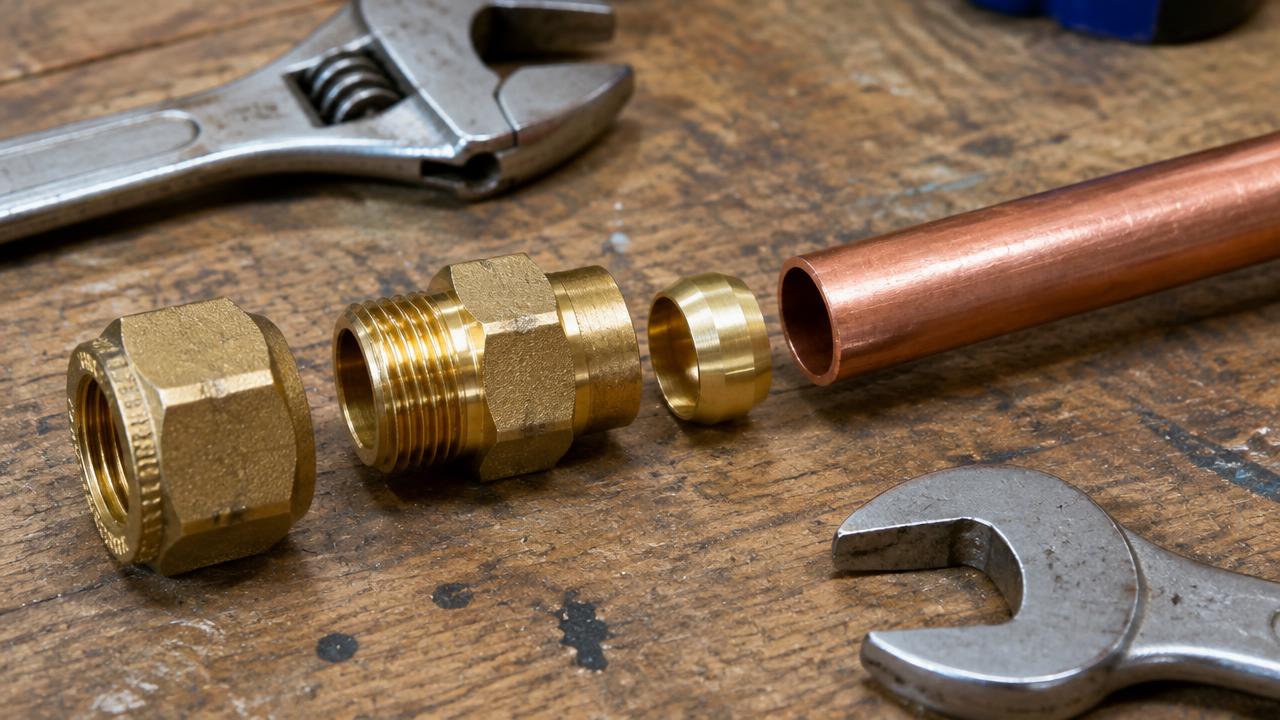
- The body — the main brass piece with threads.
- The nut — screws onto the body.
- The olive — a soft brass ring that slides over the pipe. This is the seal.
Where is the seal? Solid – Seal – Solid
The pipe is solid. The fitting body is solid. The olive sits between them. As the nut tightens, it pushes the olive into the tapered seat of the body, and the olive squeezes onto the pipe. Now there is no gap for water to escape. Without the olive, two solids would just touch and water would leak straight through.
How to make a compression joint
- Cut the pipe square with a pipe cutter, not a hacksaw if you can avoid it.
- Deburr the inside and outside so the edge is smooth.
- Slide on the nut, then the olive.
- Push the pipe fully into the fitting until it stops.
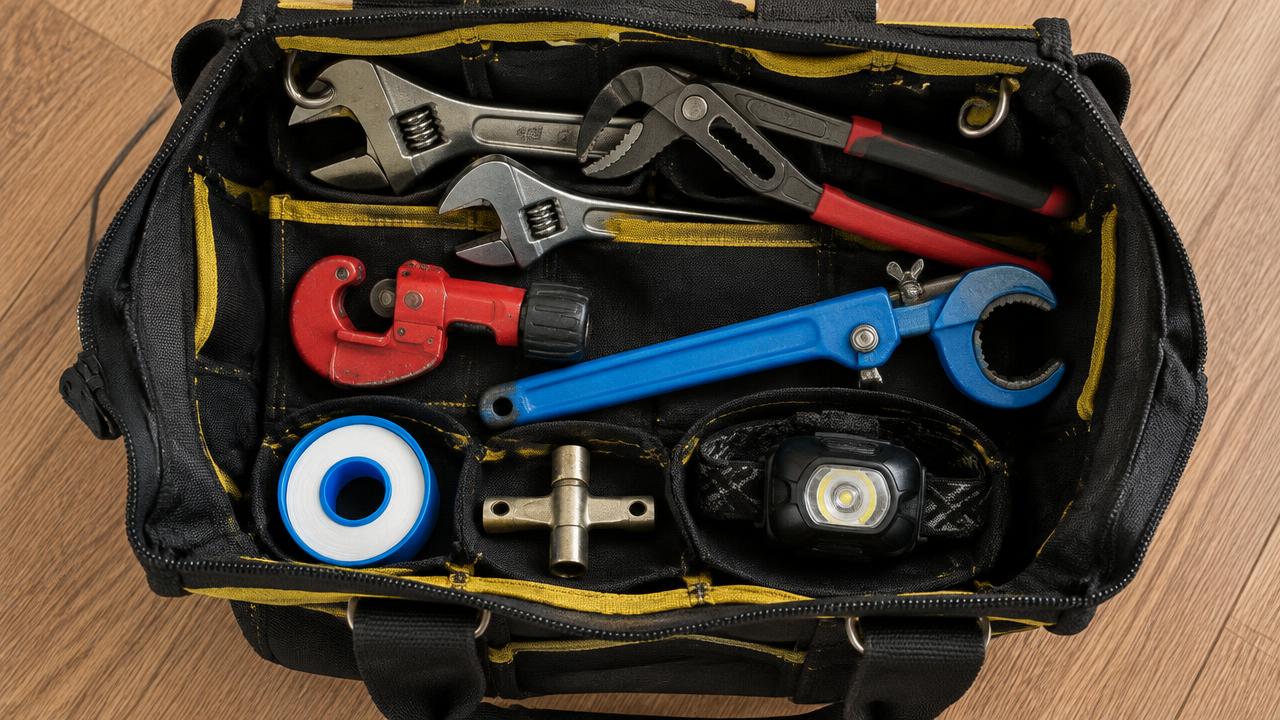
- Tighten the nut by hand, then use two spanners — one holding the body, one turning the nut — about one full turn.
- Turn the water on and check.
Pro tip: Always use two spanners. If you only use one, you twist the whole fitting and can loosen the joint on the other side.
Fixing a weeping compression joint
A slow weep is common. Hold the body and tighten the nut a quarter turn. Dry it and wait. If it still weeps, isolate the water, undo it and check the olive. A squashed, scratched or crooked olive needs replacing — cut it off carefully with an olive puller or a junior hacksaw without cutting the pipe.
Common mistakes
- Over-tightening — this crushes the olive and the pipe and makes leaks worse.
- Using PTFE tape on the threads — the threads do not seal, the olive does.
- Pipe not pushed fully home.
- Pipe cut at an angle.