What is a stopcock?
A stopcock is the main valve that controls the cold water coming into your home from the water main. When you turn it off, no new water can come in. It is the single most important valve in the house — in an emergency such as a burst pipe, every second counts.
Everyone in the home should know where it is. If you are learning plumbing, finding the stopcock is the first thing you do on every job.
Where to look for the inside stopcock
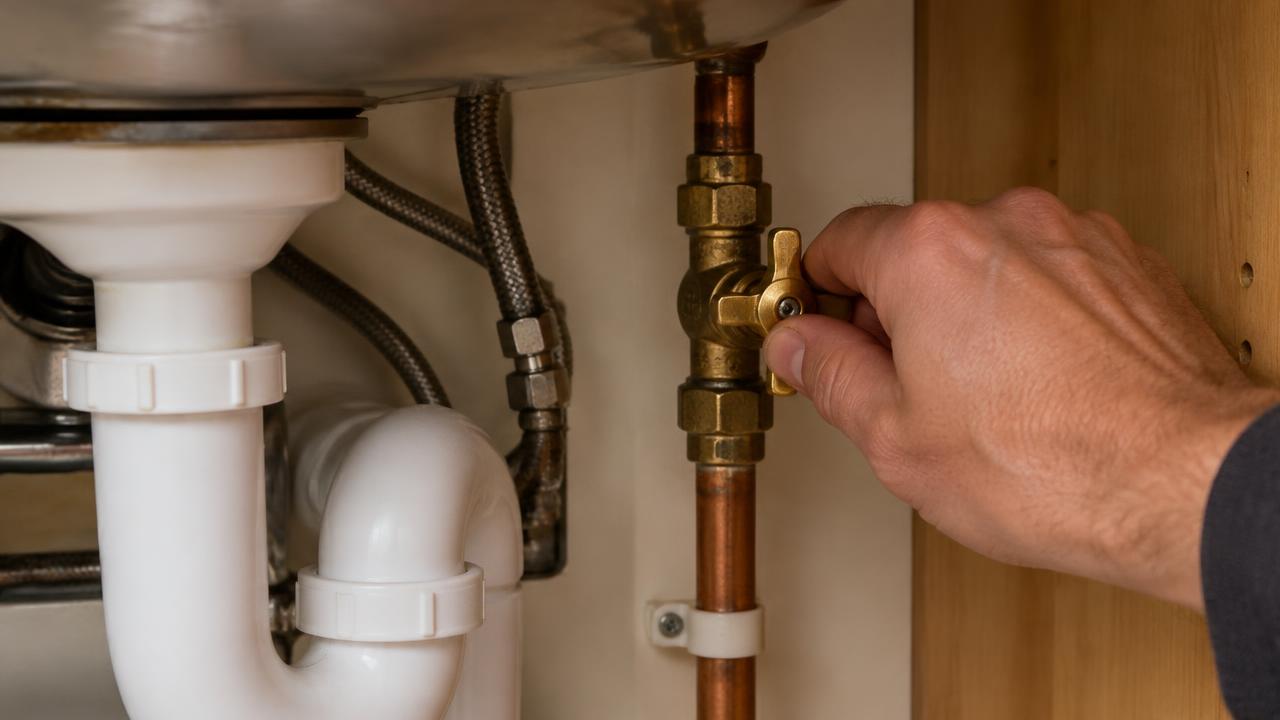
- Under the kitchen sink — the most common place in UK homes.
- Near the front door, under the stairs, or in a downstairs toilet.
- In a garage or utility room.
- In flats, it may be in a cupboard, in the hallway, or even in a shared corridor.
- In older homes, under floorboards near the front of the house.
Pro tip: Follow the pipe. The incoming main is often blue plastic (MDPE) or older lead or copper coming up through the floor. The stopcock is usually just above where it enters.
How to turn it off
- Turn the handle clockwise until it stops. Do not force it at the end.
- Open the cold kitchen tap to check — the water should slow and stop.
- To turn back on, turn anti-clockwise slowly. Then turn it back a quarter turn from fully open; this helps stop it seizing up.
If the stopcock is stuck
Stopcocks that are never used can seize with limescale. Try gentle pressure with a cloth for grip. Never hit it or use a long bar — you can snap the spindle and make the leak worse. If it will not move, use the outside stopcock or call your water company's emergency number.
The outside stopcock
Outside, there is usually another stopcock under a small metal or plastic cover in the pavement or front garden, often near the boundary. It may be deep down and needs a long stopcock key. The part on the public side often belongs to the water company; the pipe on your side is usually yours to look after.
Shared stopcocks
In some terraced houses and converted flats, one stopcock controls several homes. Turning it off cuts water to your neighbours too, so always tell them first. Many owners later choose to have their own separate supply fitted.
Test it twice a year
Turn your stopcock off and on a couple of times a year. It keeps it moving and means it will work when you really need it.