Do you need qualifications to be a plumber?
In the UK you do not need a licence to do general domestic plumbing like changing taps or fixing toilets. You must follow water regulations and do the work safely. Some work, such as gas, is legally restricted to registered engineers — at Plumbers University we teach plumbing only, no gas.
Qualifications such as NVQs help if you want to work for bigger firms or do larger installations. For your own small jobs, customers mostly care that you are skilled, reliable, insured and fair.
The main routes
- Apprenticeship: earn while you learn, but places are limited and it often takes years.
- College: classroom and workshop, often part-time over a long period.
- Online learning plus practice: learn the theory at your own pace, with real teacher support, and practise on real fittings.
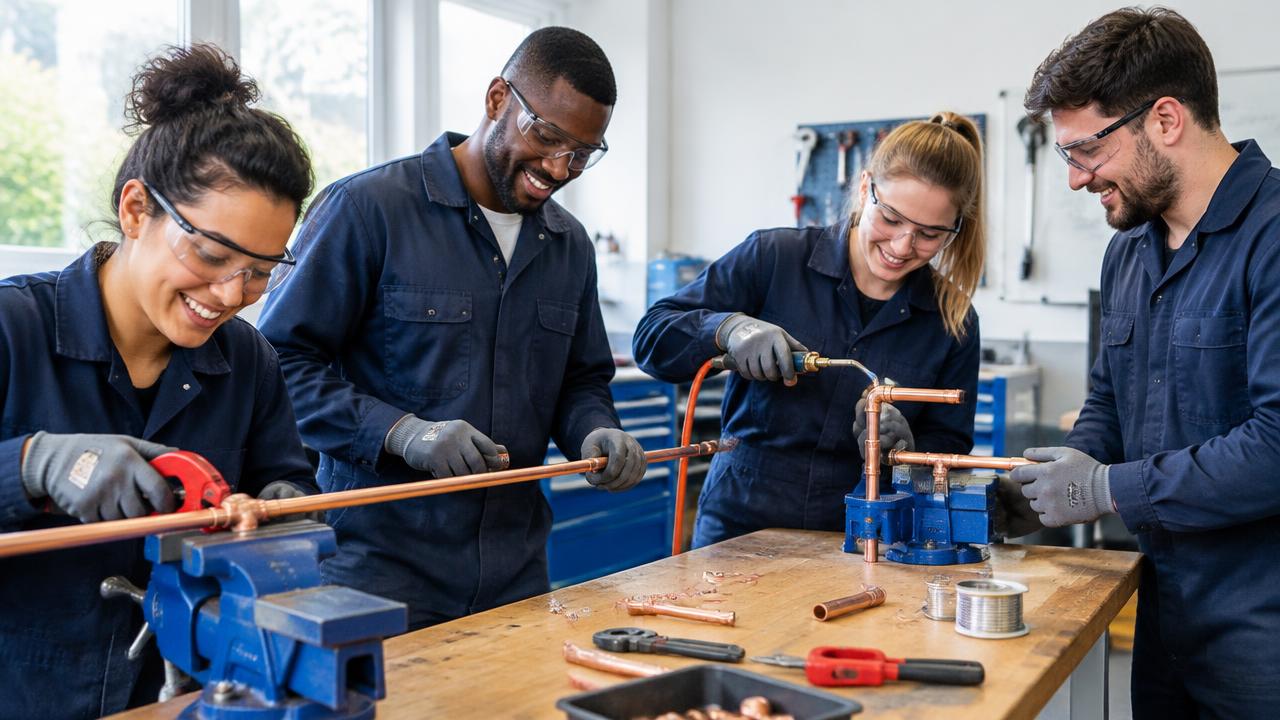
- Short practical courses: intensive hands-on days in a workshop.
A faster, smarter path
Many of our students start with zero knowledge. They learn the basics — water systems, stopcocks, isolation valves, fittings and the SSS seal rule — then move on to taps, toilets, radiators and drains. Our course has at least 6 months of material, but many students do their first small paid job within a month, starting with simple jobs.
What you need to start
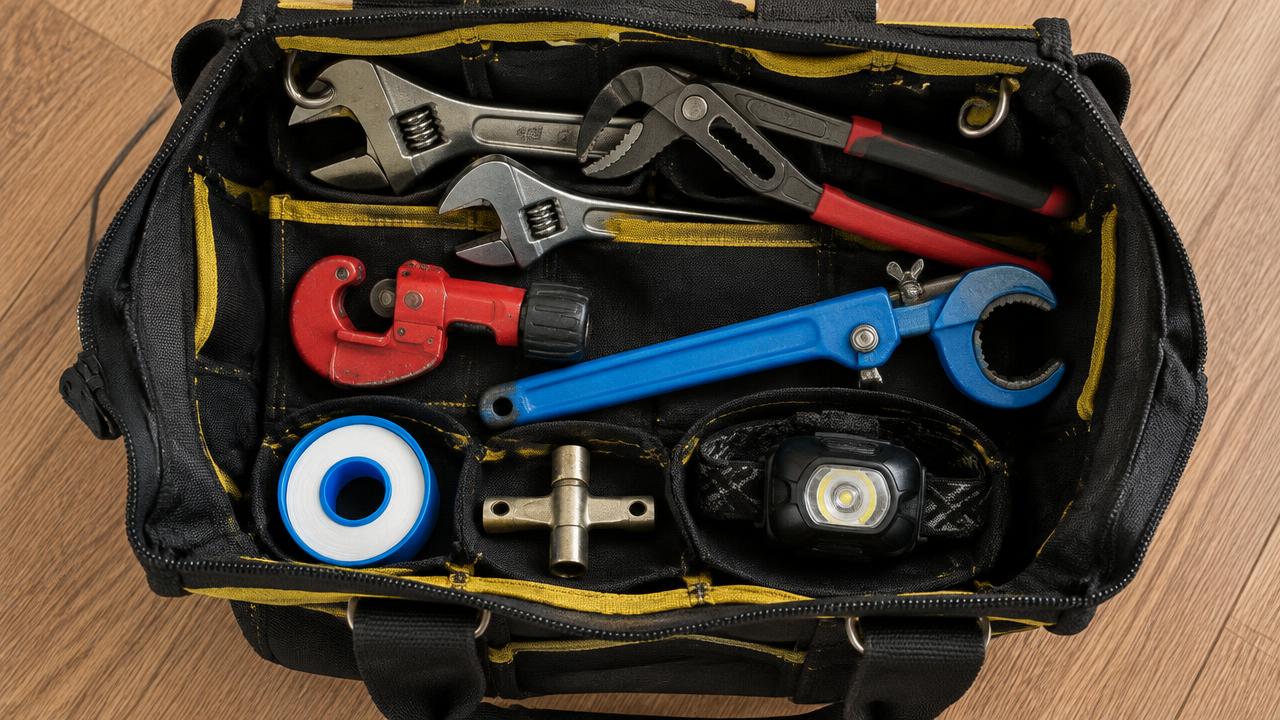
- A basic tool bag (see our tool bag guide).
- Public liability insurance.
- A simple way to price, quote and get paid.
- Clear knowledge of what you can and cannot do safely.
How much can you earn?
Small domestic jobs such as replacing a tap or fixing a toilet are typically priced per job. Prices vary a lot by area and experience, so research local rates. Build a reputation with good reviews and your prices can grow.