Side entry or bottom entry?
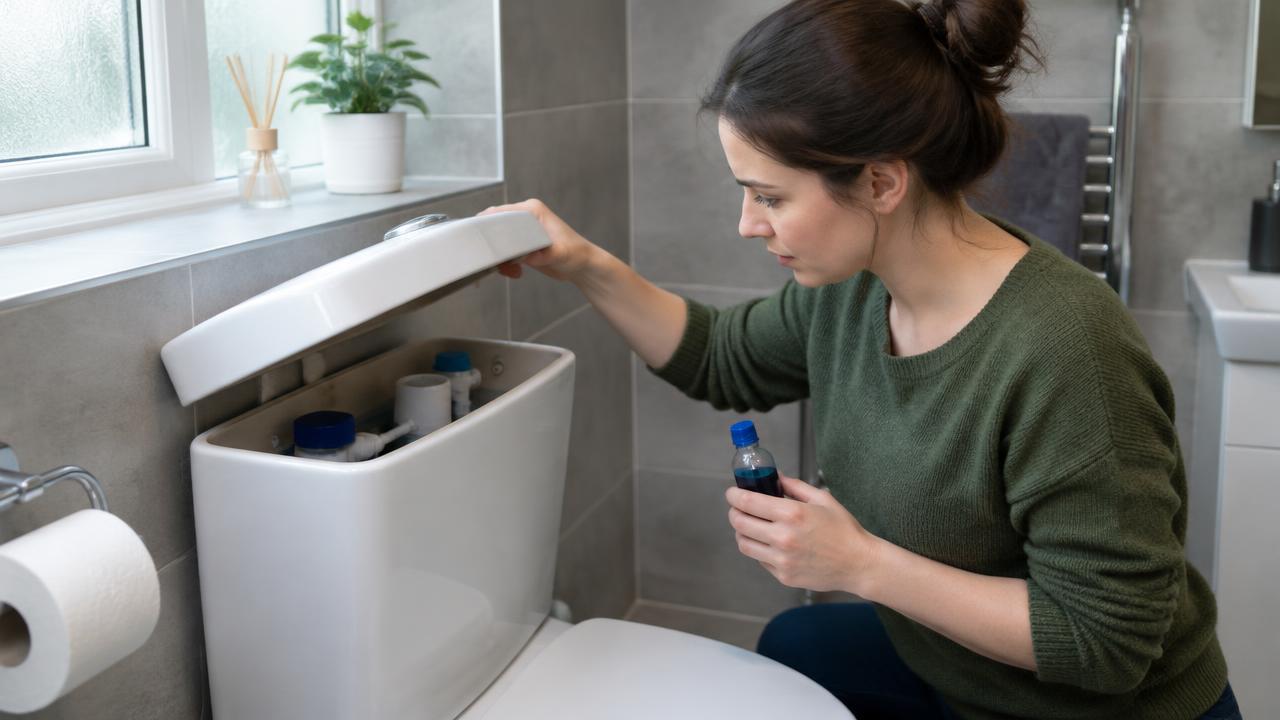
Look where the water pipe enters the cistern. If it comes in at the side, you need a side-entry valve. If it comes up from below, a bottom-entry valve. Many universal valves fit both. Check the height too — tall valves will not fit short cisterns.
Removing the old valve
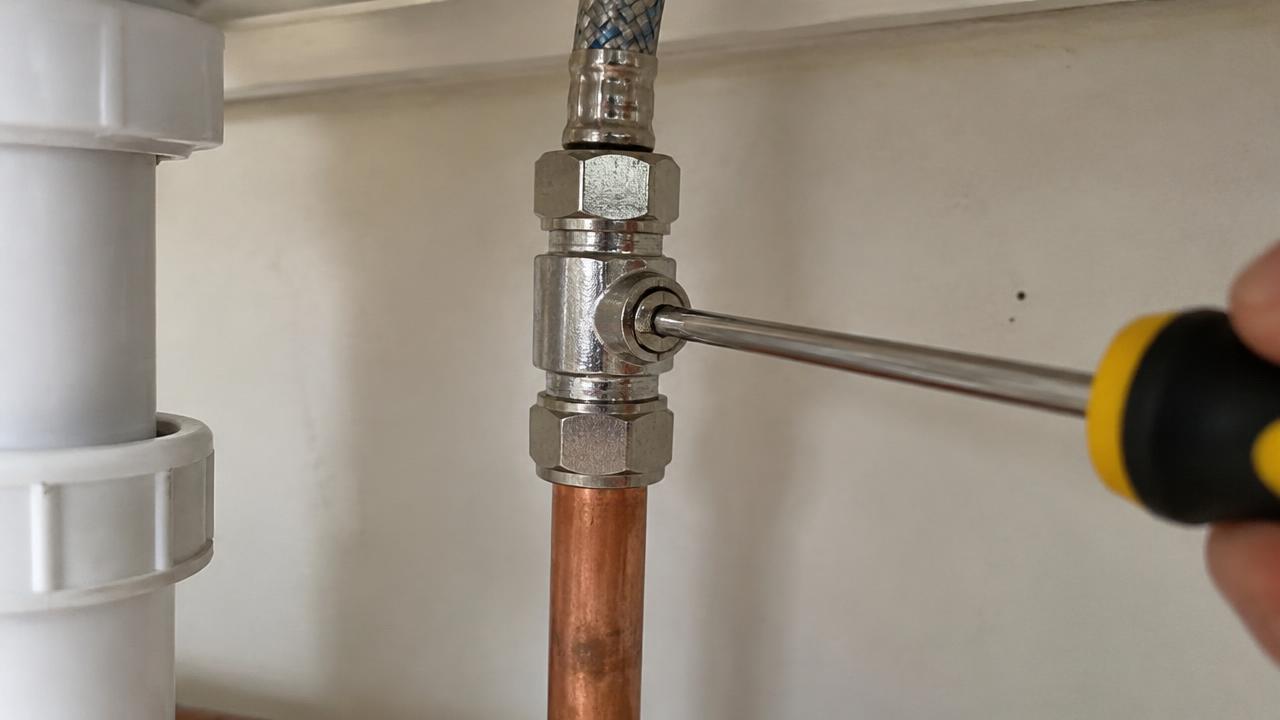
- Turn off the toilet isolation valve.
- Flush, then sponge out the remaining water.
- Undo the supply connector under or beside the cistern.
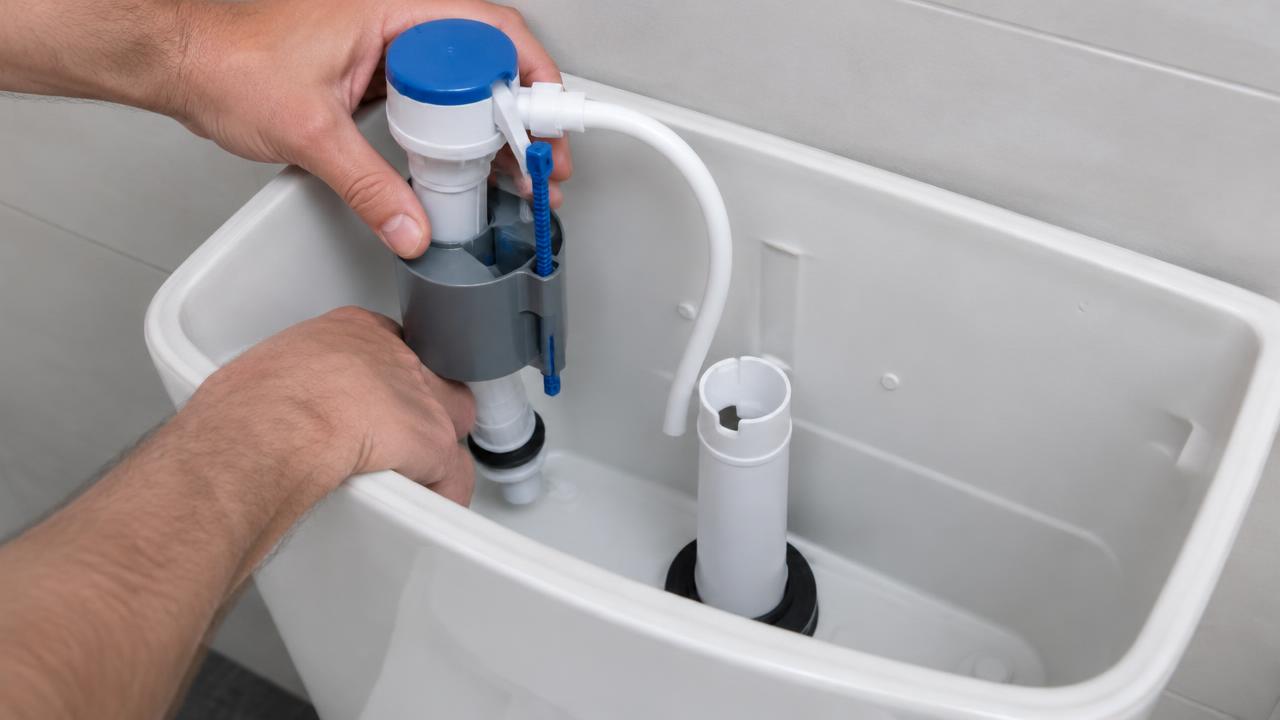
- Undo the plastic back nut on the outside and lift the valve out.
Where the washer goes
The rubber washer must go on the inside of the cistern, between the valve and the cistern wall, where the water is. That washer is the seal between the solid valve and the solid cistern. The back nut on the outside only clamps it. If you put the washer on the outside, water leaks through the hole.
Pro tip: Hand-tighten the plastic back nut, then a small extra turn. Too tight cracks the cistern.
Setting the water level
Turn on slowly. The water should stop about 20–25mm below the top of the overflow, or at the mark inside the cistern. Most modern valves adjust with a screw or a sliding float.
Troubleshooting
- Slow fill: some valves have a low-pressure setting or need the flow restrictor removed for gravity systems.
- Noisy fill: worn valve or high pressure — modern valves are much quieter.
- Keeps running: level set too high, or debris in the valve.