Choosing the right kitchen tap
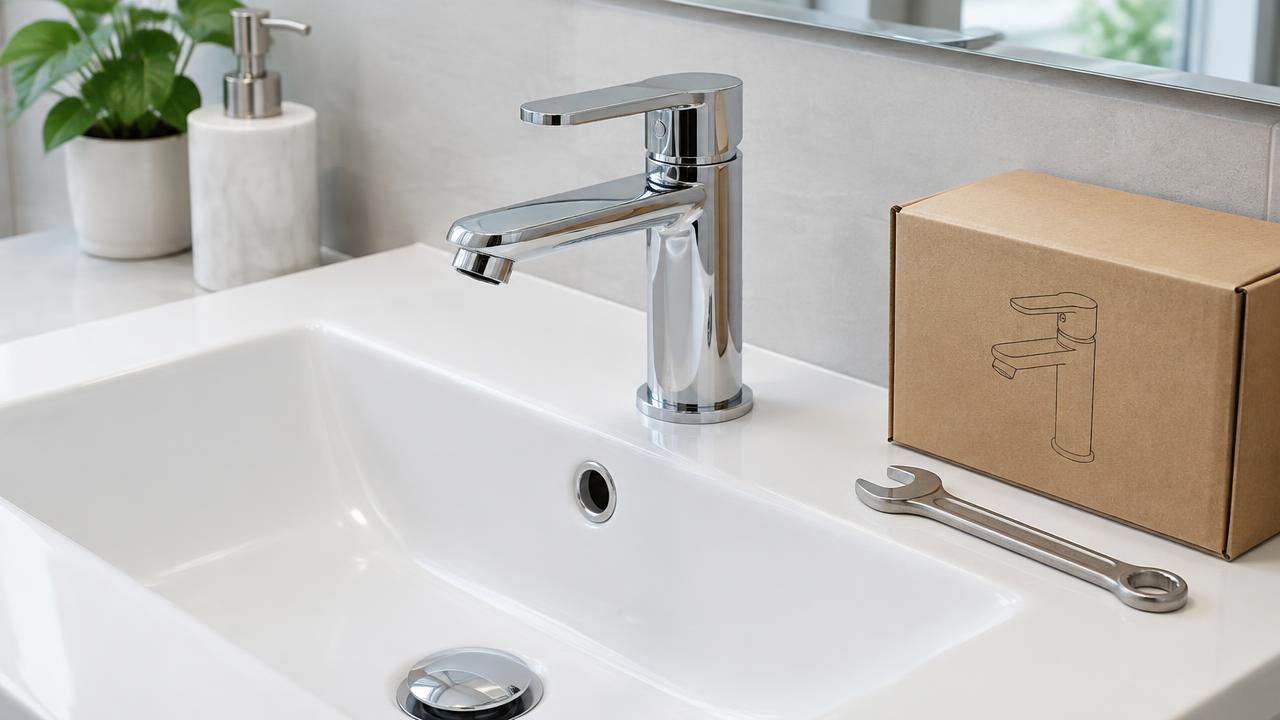
- Check the number of holes in your sink — most modern sinks have one.
- Check water pressure: some taps need at least 1 bar. Low-pressure homes need a tap rated for low pressure.
- Check spout height and reach so it clears the bowl and the window.
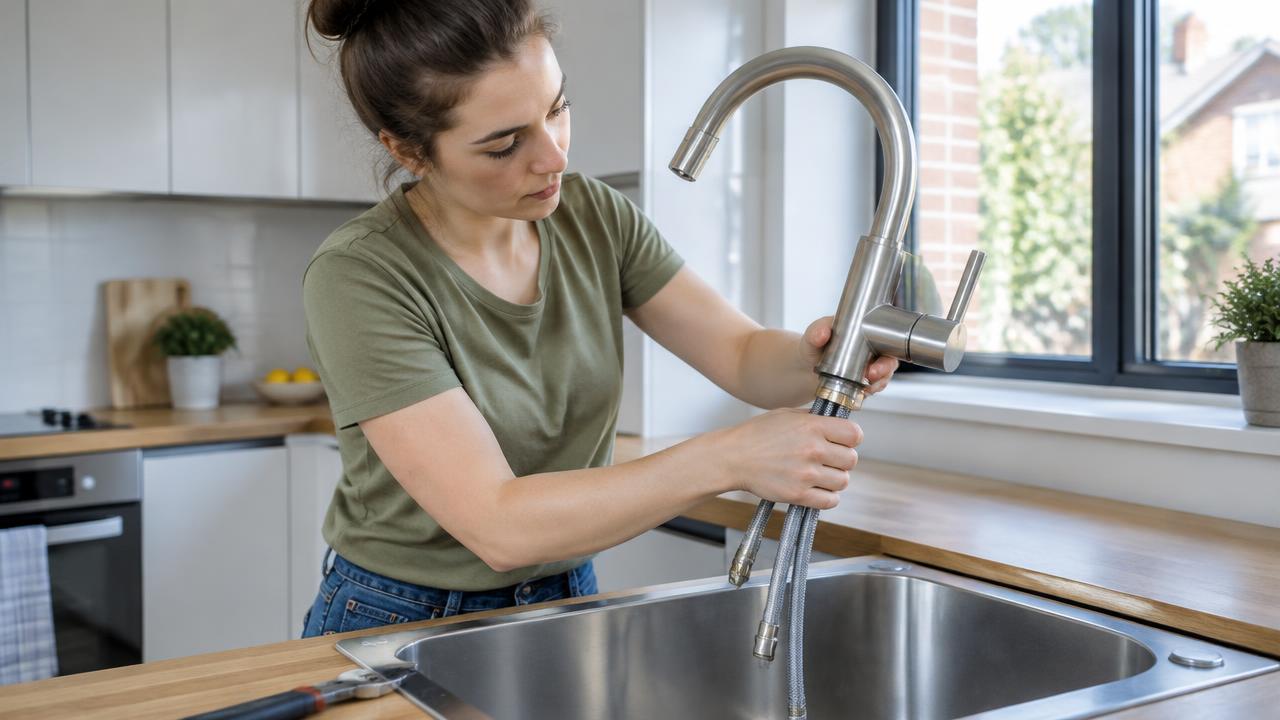
- Pull-out spray taps need room underneath for the hose and weight.
Removing the old tap
- Turn off both isolation valves, or the stopcock and drain the hot.
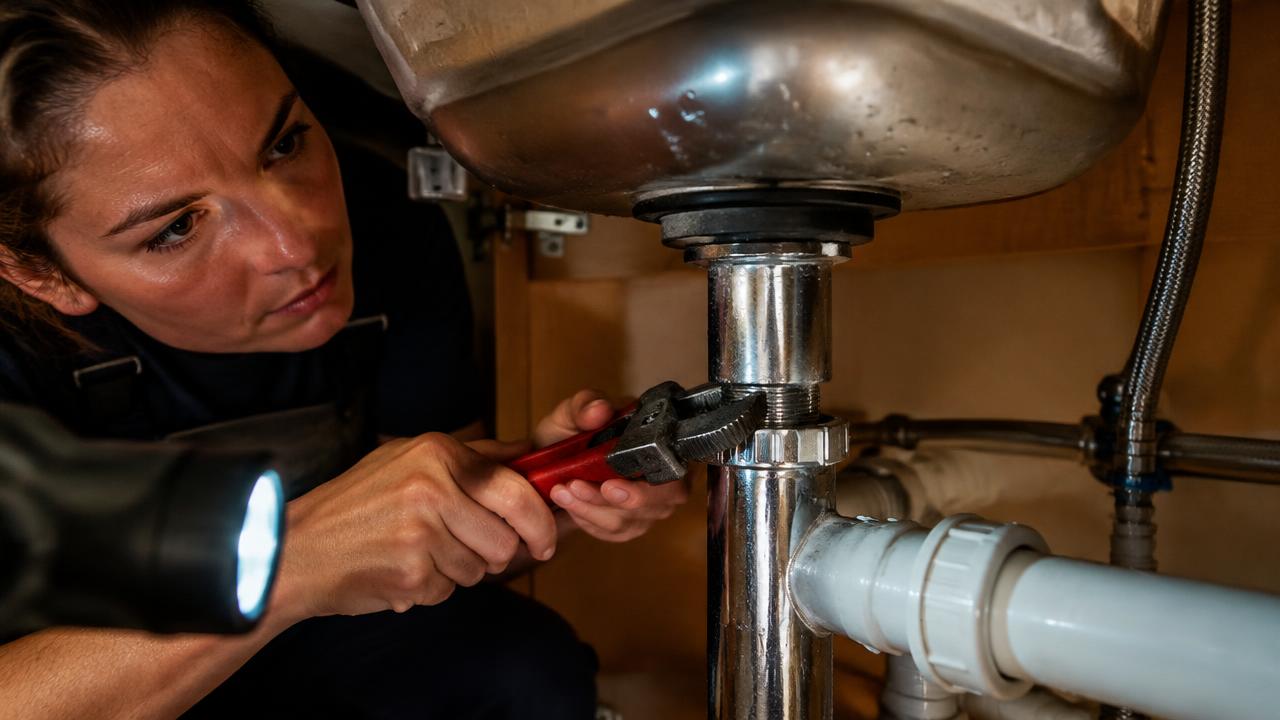
- Clear the cupboard, lie on your back with a head torch.
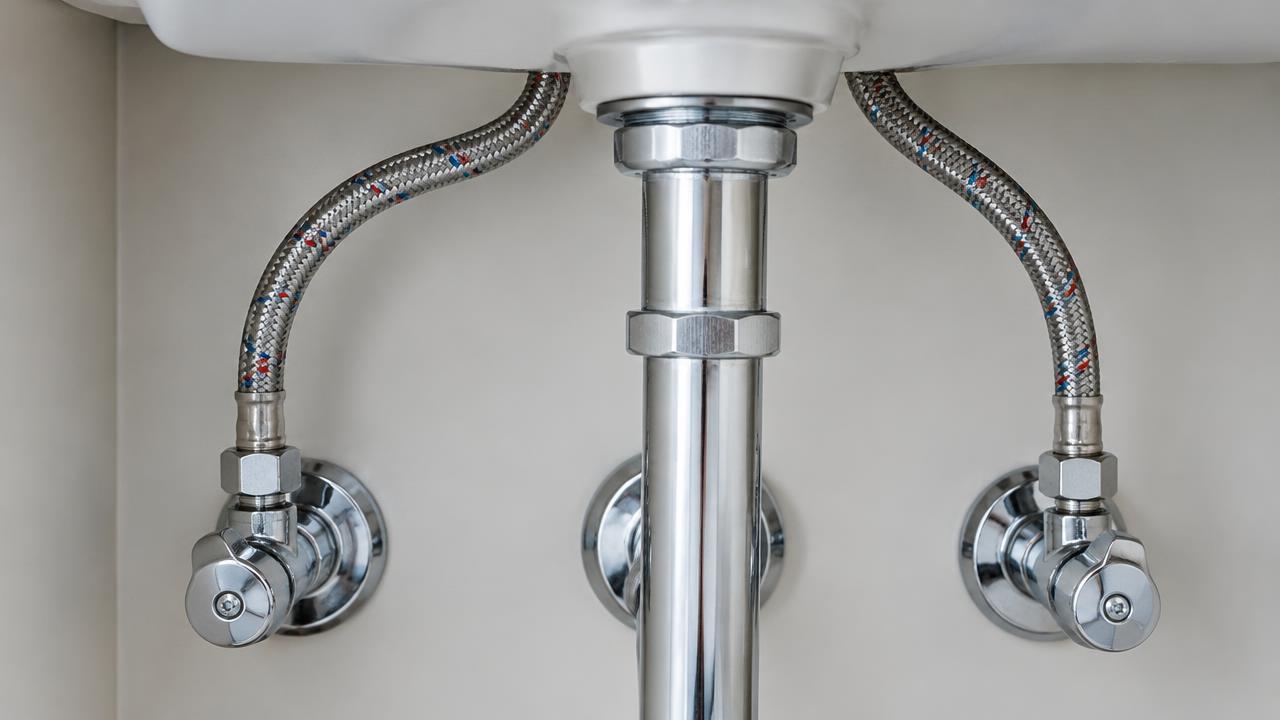
- Undo the supply connections. Older taps may have copper pipes with tap connectors — undo the nut at the tap.
- Undo the back nut with a basin wrench and lift the tap out.
- Clean the sink surface.
Pro tip: If the back nut is seized, a long-reach basin wrench is worth every penny. Spray penetrating oil and wait 10 minutes.
Fitting the new tap
- Screw the flexi tails into the tap by hand.
- Fit the base seal under the tap — Solid tap, Seal, Solid sink.
- Feed the tails through and set the tap straight.
- From below, fit the support plate, washer and nut. Tighten firmly.
- Connect hot and cold tails to the isolation valves. Firm, plus a quarter turn.
Testing
Turn the water on slowly. Check every joint with dry tissue, run hot and cold, check again. Look again the next day.
Common mistakes
- Sink is stainless and thin — over-tightening bends it. Use the support plate.
- Flexi tails twisted or kinked.
- Hot and cold swapped.
- Low-pressure system with a high-pressure tap — weak flow.