The parts
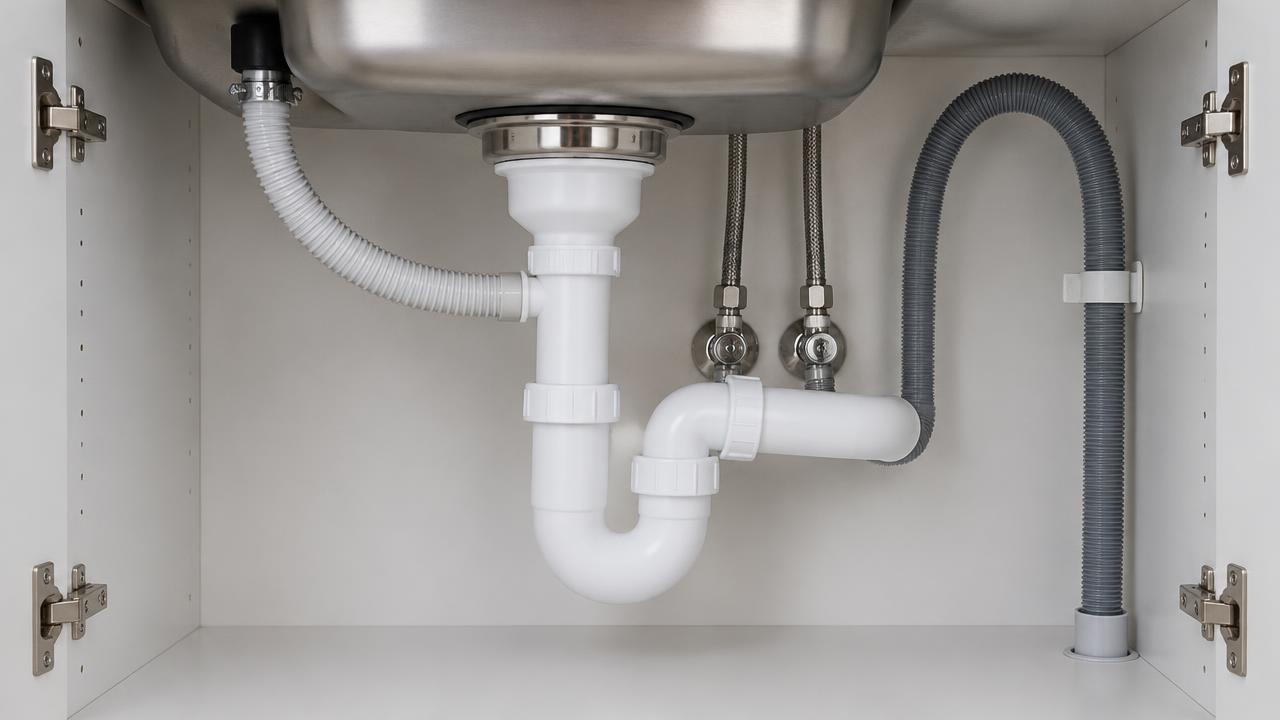
- Basket strainer waste — the plug hole with a removable basket.
- Overflow — a small hose from the overflow slot to the waste.
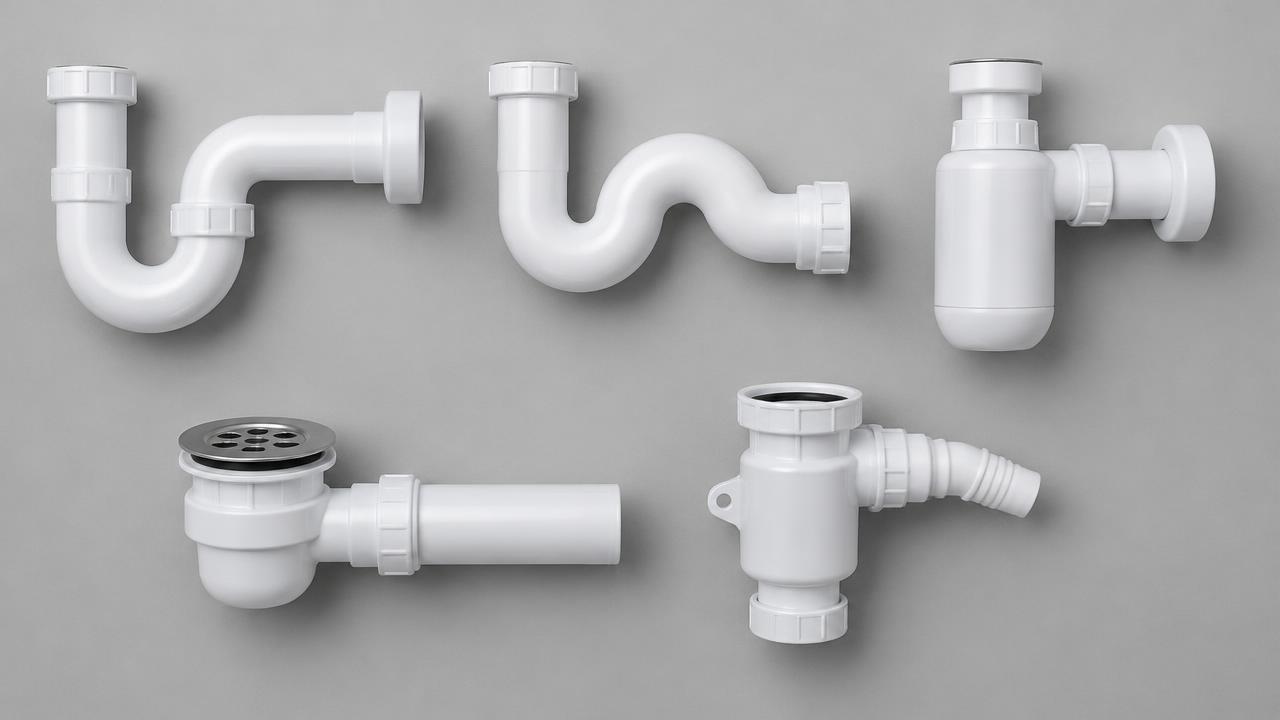
- Trap — 40mm, often with an appliance spigot.
- Waste pipe — 40mm, to the outside gully or soil stack.
Appliance connections
Washing machines and dishwashers drain into the trap spigot or a standpipe. The hose needs a high loop — raised above the trap — so dirty water does not siphon back into the machine. Use a hose clip.
Pro tip: Many traps have a sealed blanking cap on the spigot. If you connect an appliance, cut or remove the cap fully or the machine will not drain.
Fixing common leaks
- Basket strainer: re-seat the seal under the flange and tighten the back nut.
- Overflow hose: check both ends and their seals.
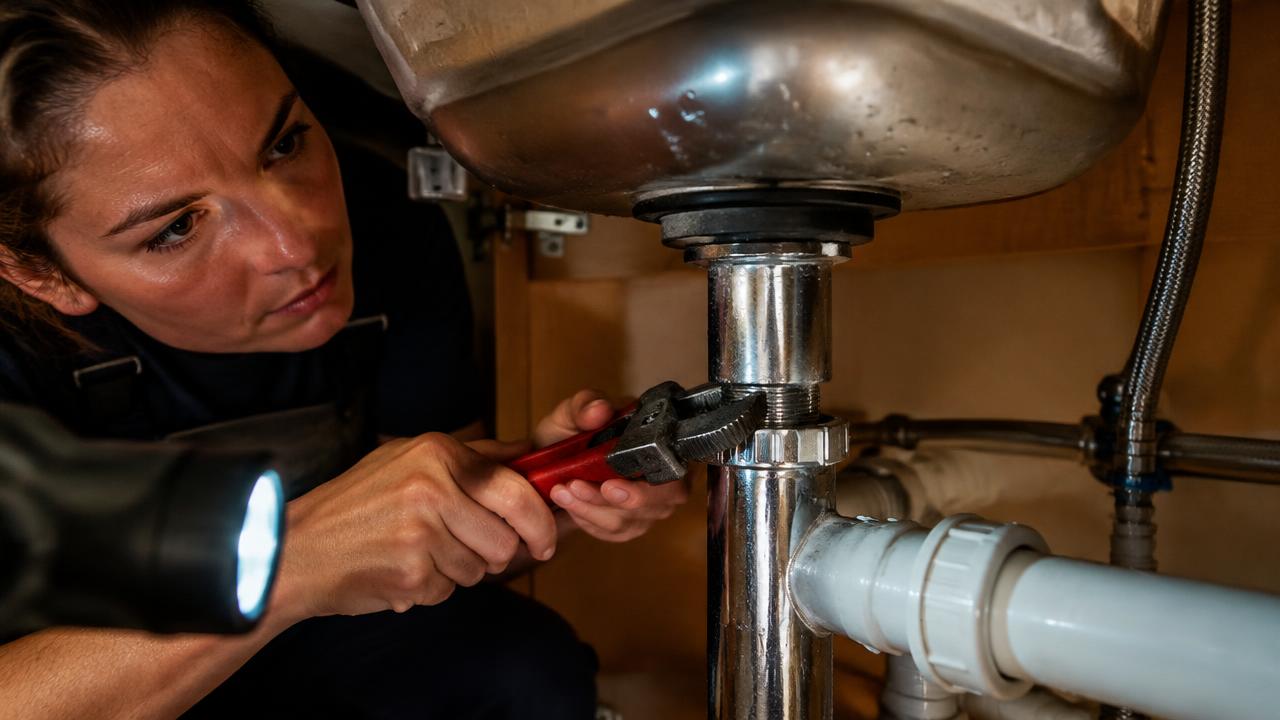
- Trap nuts: check washers.
- Appliance hose: tighten the clip, check the hose for splits.
Grease: the biggest enemy
Never pour fat down the sink. Wipe pans first. A monthly kettle of hot water with washing-up liquid helps keep the waste clear.