Why sinks block
Kitchen sinks block with grease, fat and food. Bathroom basins block with hair, soap and toothpaste. Fat is the big one — it goes down hot and liquid, then cools and sets hard in the pipe, catching everything else.
Step 1: Try a plunger
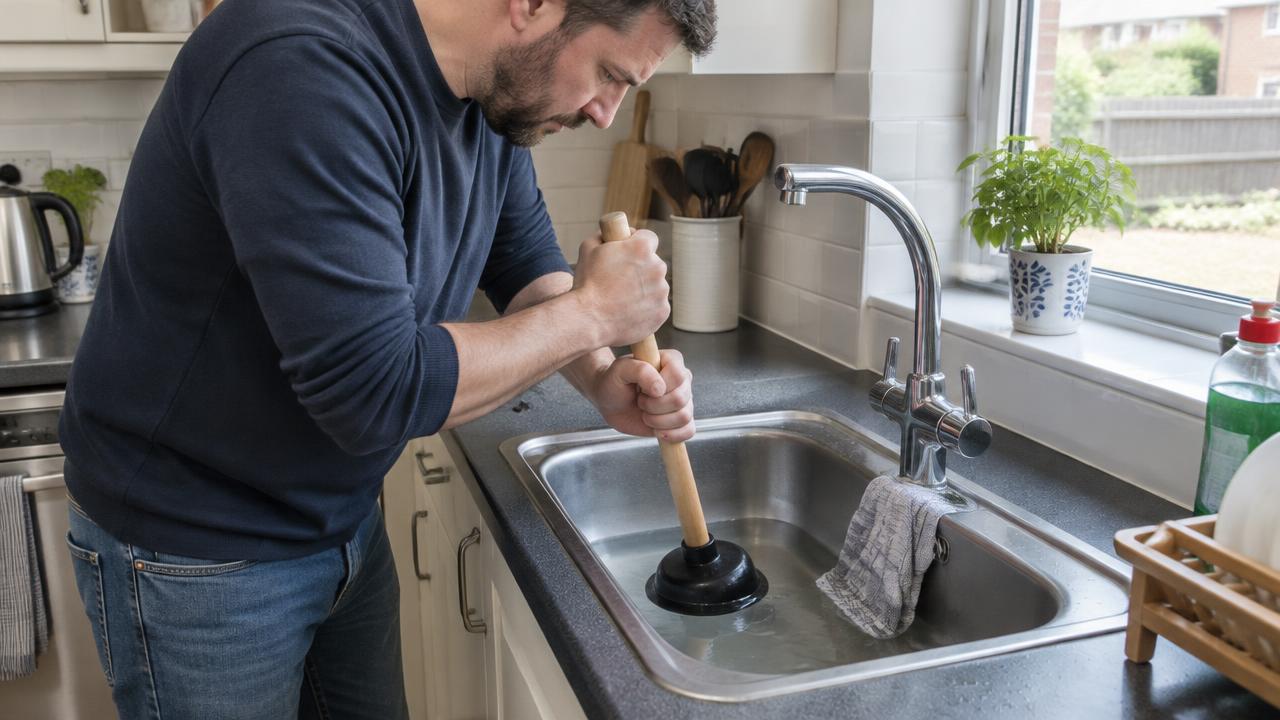
- Put a little water in the sink so the plunger covers it.
- Block the overflow hole with a wet cloth — otherwise the pressure escapes through it.
- Pump firmly 10–15 times and pull up quickly.
- Run hot water and see if it drains.
Step 2: Clear the trap
The trap is the bent pipe under the sink. It holds water to stop drain smells coming into the house, but it also catches debris. Put a bucket underneath and unscrew the nuts by hand. Empty and clean it.
Pro tip: Each trap nut has a rubber washer or cone seal inside. Check it is in place and the right way round when you refit — this is the seal between the two solid plastic parts. Missing washers are the number one cause of leaks after clearing a trap.
Step 3: Go further down the pipe
If the trap was clear, the blockage is further along. Use a small drain snake through the pipe. Push and twist until you feel it break through. If the outside gully drain is also full, the blockage is in the main drain and may need a drainage company.
What not to put down the sink
- Cooking fat, oil and grease — wipe pans with kitchen roll first.
- Coffee grounds and rice.
- Wet wipes and cotton buds.
- Paint and plaster.