Why radiators need bleeding
Air collects at the top of radiators over time. Air does not carry heat, so the top of the radiator stays cold while the bottom is warm. Bleeding lets that trapped air out so hot water can fill the whole radiator again.
Step by step
- Turn the heating off and wait until the radiators are cool — hot water can scald.
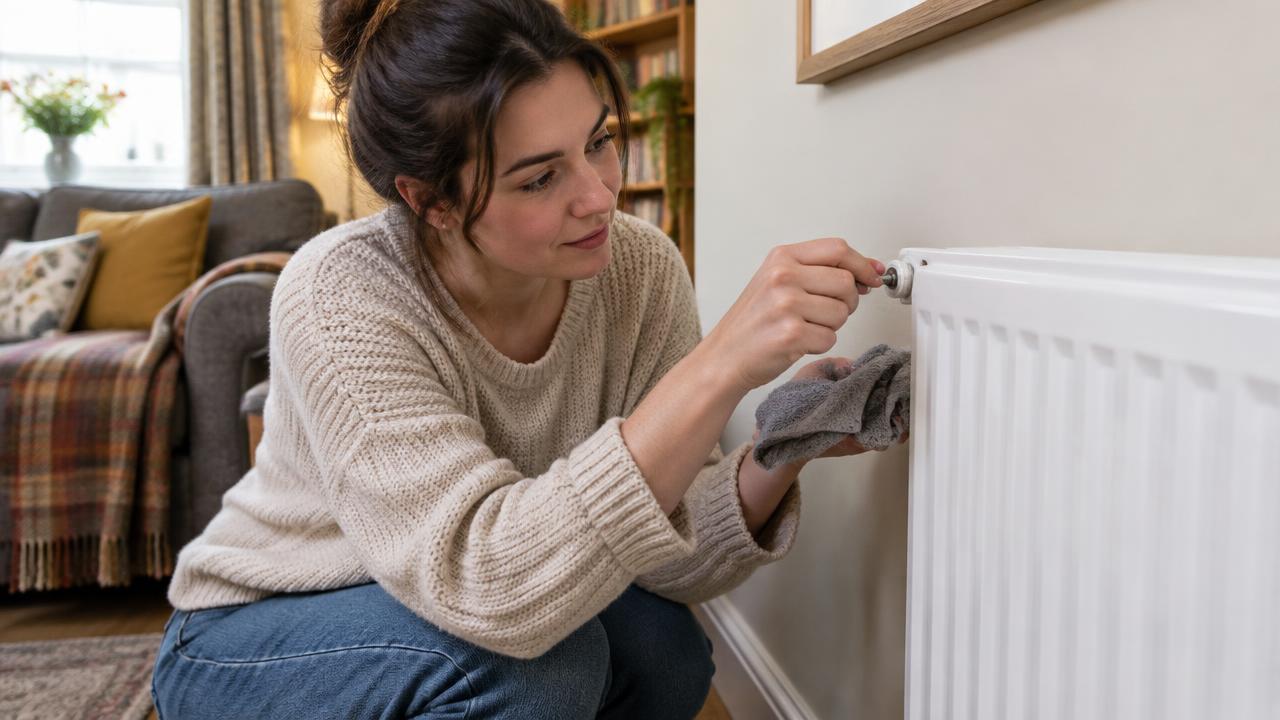
- Find the bleed valve at one top corner of the radiator.
- Hold a cloth underneath and put the key on the valve.
- Turn anti-clockwise about a quarter turn. You will hear air hiss.
- As soon as water starts to come out steadily, close the valve clockwise.
- Repeat for each radiator, starting downstairs and working up.
Check the pressure
Many homes have a sealed heating system with a pressure gauge. Bleeding lets out a little water, so the pressure can drop. If the gauge is below the level in your manufacturer's instructions, the system needs topping up. If you are not sure how, ask a heating engineer.
Still cold?
- Cold at the bottom but hot at the top — likely sludge; the radiator may need flushing.
- Cold all over — check the valve is open and the thermostatic valve pin is not stuck.
- Some radiators hot and others cold — the system may need balancing.
Leaking from the bleed valve?
If water keeps seeping after closing, the bleed valve's small seal may be worn. Replacement bleed screws are cheap and easy to fit once the radiator is isolated.