Copper pipe
- Common sizes: 15mm for taps and toilets, 22mm for main runs.
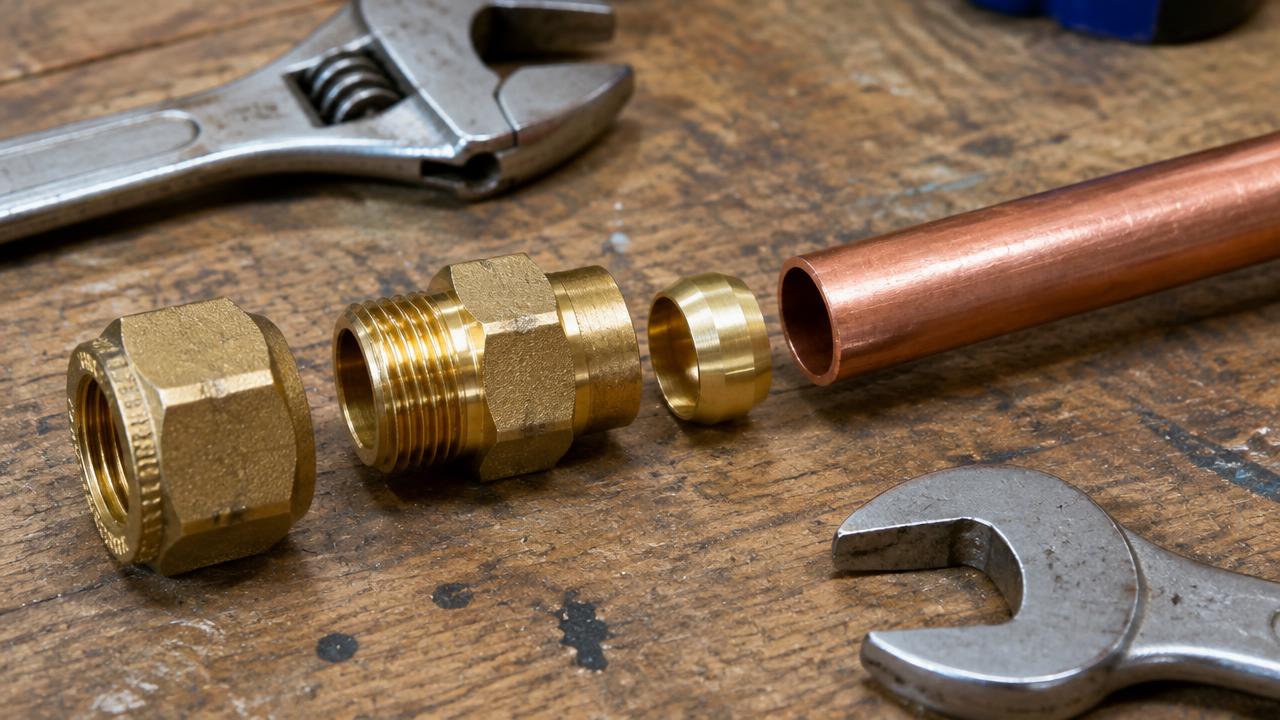
- Joined by compression, soldered or push-fit fittings.
- Rigid, neat, long-lasting, resistant to heat and UV.
- More expensive and harder to run through tight spaces.
Plastic pipe
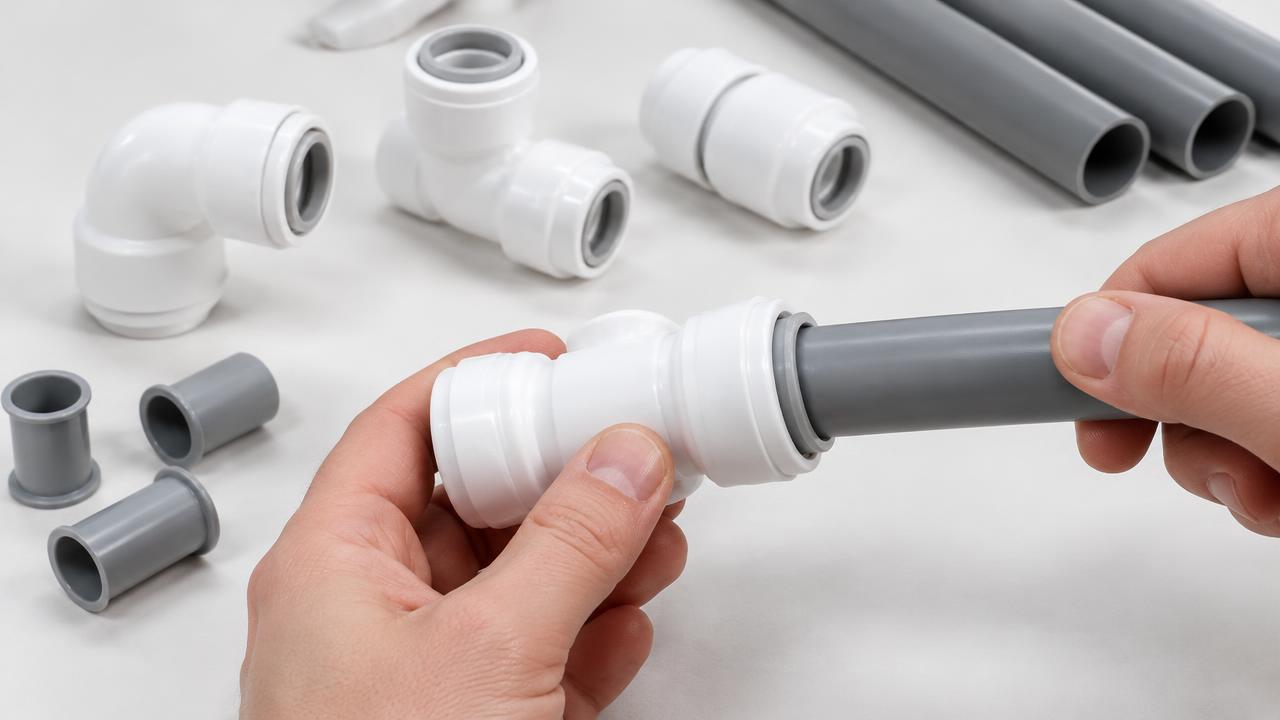
- Flexible — fewer joints, runs through joists easily.
- Joined mainly with push-fit, using pipe inserts.
- Quieter and less likely to burst in frost.
- Must be clipped well, kept away from sunlight and sharp edges, and is not suitable in some places near heat sources.
Mixing copper and plastic
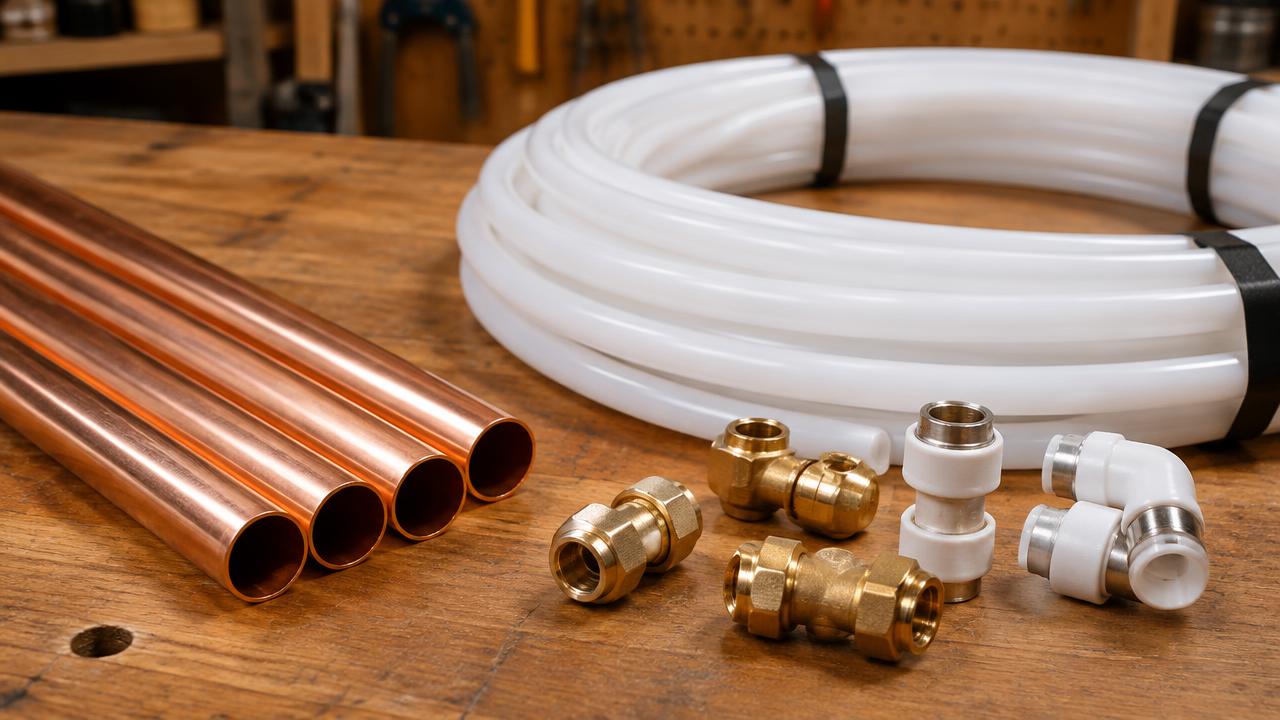
It is normal to join the two. Push-fit fittings take both. Compression fittings can join plastic pipe if a pipe insert is used and the manufacturer allows it.
Pro tip: Plastic pipe is not a conductor. If you replace a section of copper with plastic, earth bonding may be affected — an electrician should check.
Which should a beginner learn?
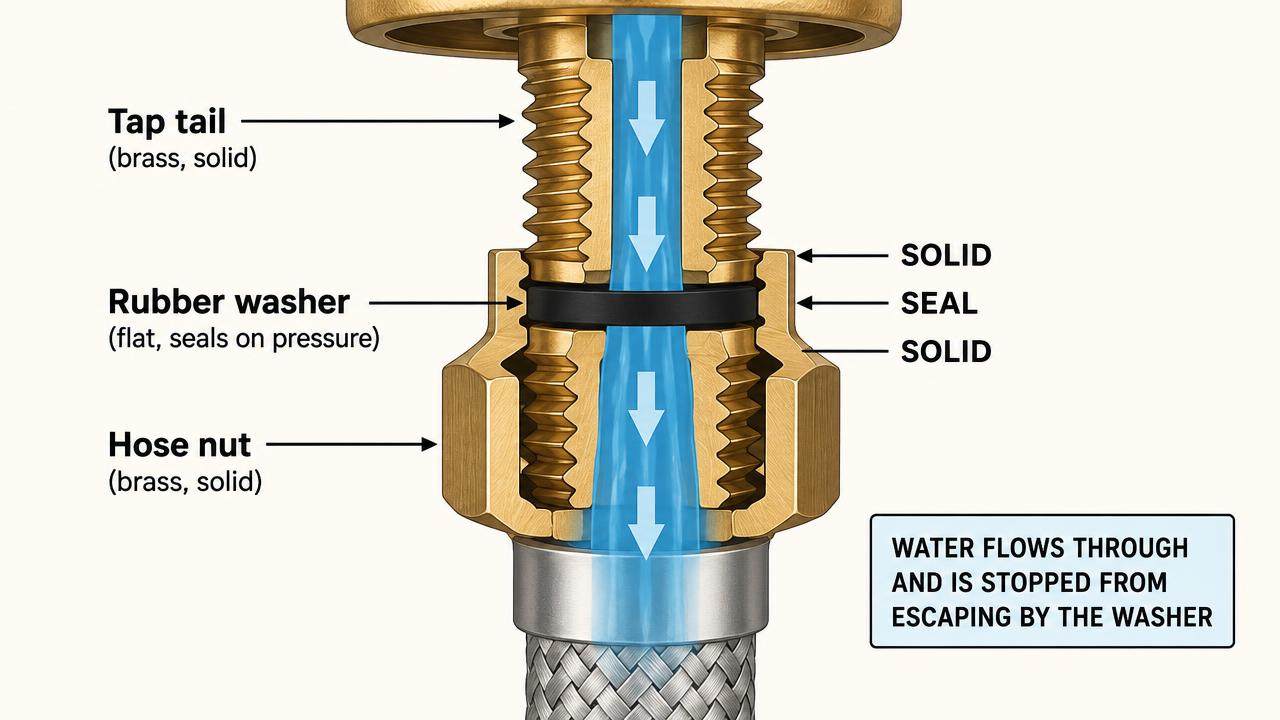
Both. Most domestic repairs meet existing copper, and many new installations use plastic. Learning how each seals — olive, O-ring — is the key skill.