The first five minutes
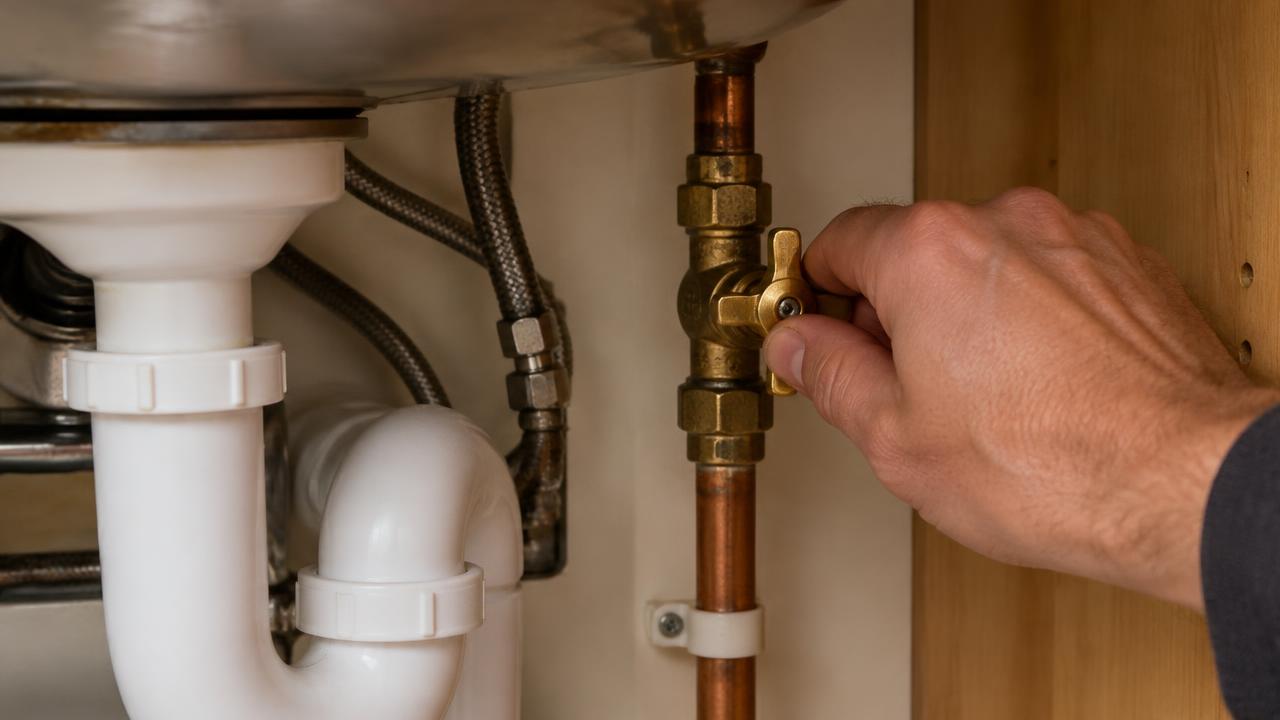
- Turn off the main stopcock (clockwise).
- If water is near sockets, lights or the fuse box, turn the electricity off at the consumer unit if you can reach it safely. Never touch electrics while standing in water.
- Open all cold taps and flush toilets to drain water out of the pipes.
- If you have a cold water tank in the loft, open taps fed from it to drain it.
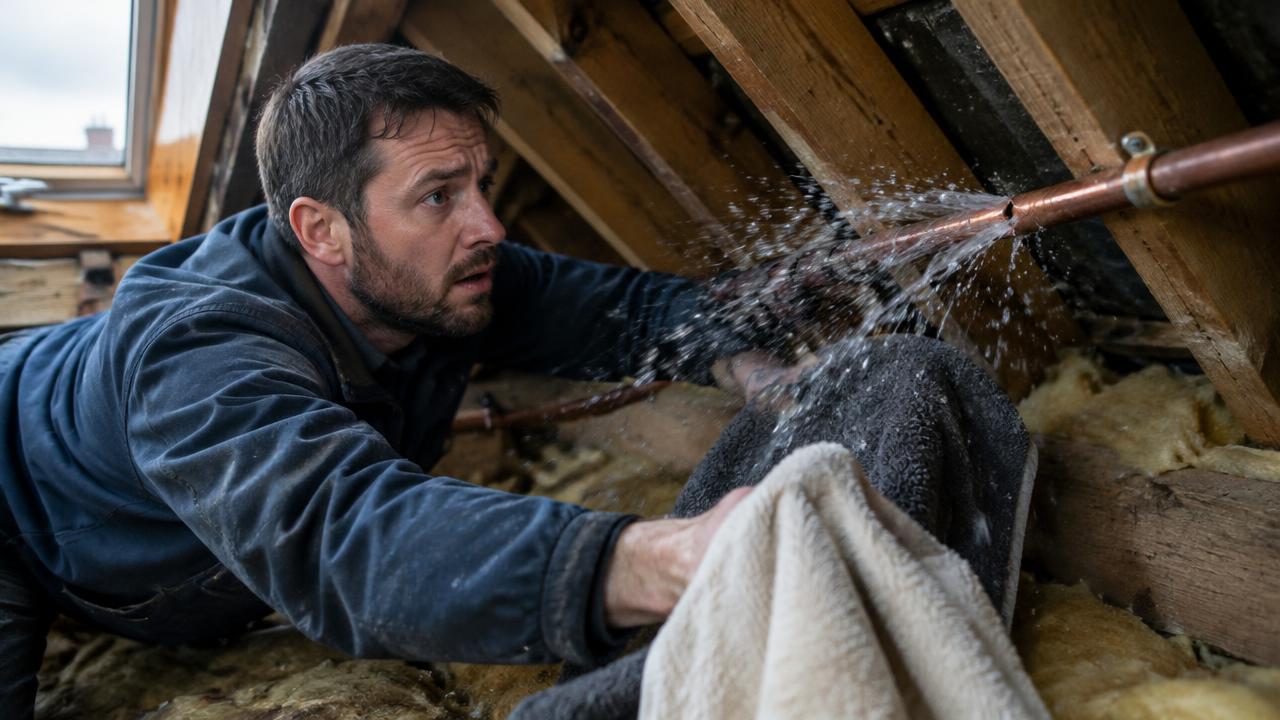
- Move valuables and catch water with buckets and towels.
Find the burst
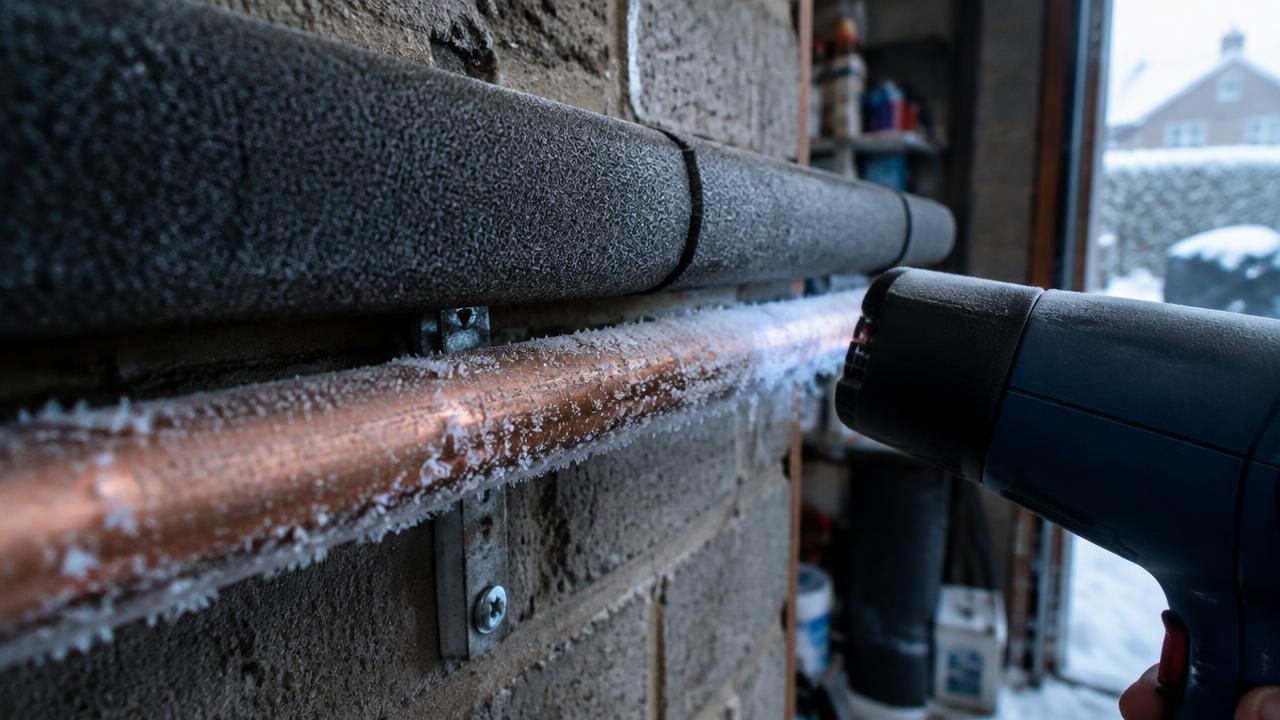
Look for the wettest point, bulging ceilings, or sound of water. In winter, bursts are common in lofts, garages and outside walls where pipes freeze. A bulging ceiling with water above it can collapse — keep people away and, if safe, make a small hole with a screwdriver to let the water out into a bucket.
Temporary repairs
- Pipe repair clamp: a rubber pad and metal clamp bolted over the split. The rubber is the seal between pipe and clamp.
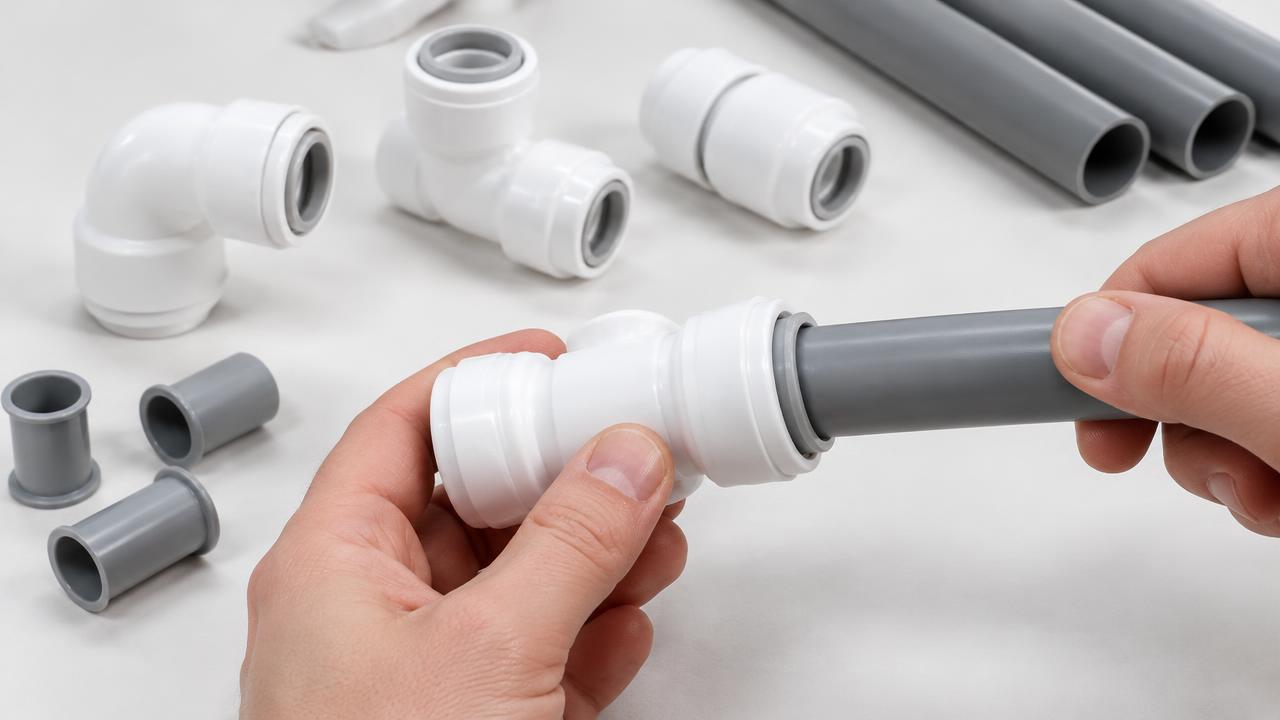
- Slip coupling: cut out the split section and fit a push-fit or compression slip coupling.
- Repair tape: self-amalgamating tape is a short-term fix only.
Stop it happening again
- Lag pipes in lofts, garages and outside walls.
- Fit and use an isolation valve on outside taps, and drain them in winter.
- Know where your stopcock is and test it twice a year.
- Keep a little heat on in cold weather if you go away.
Insurance and records
Take photos and videos of the damage and the burst. Keep receipts for any emergency work. Most home insurers ask for this.